Claudeium (WIP)
A task ledger for AI-assisted coding where nothing counts as done until a check has passed against the files it covers.
Sole developer · 2026
Overview
Claudeium is built around one principle: any compatible agent can contribute, every meaningful result is traceable, and completion needs evidence. It ships as a Claude Code plugin on top of a small platform-independent core, plus a portable AGENTS.md that any coding agent can follow.
A run investigates, proposes a plan with tasks, owned files, dependencies, and a verify command, waits for approval, then loops: a worker agent per task, then an independent verifier agent, then recorded evidence. It never commits or pushes.
Problem
When an AI agent says a task is done, nothing backs that up, and later edits can quietly invalidate it. Claudeium makes done mean something, with small enforced rules instead of a promise.
What I did
Solo project: the ledger core, the plugin's agents, skills and hooks, the tests, and the documentation.
Built with
- JavaScript
- Node.js
- Claude Code plugin
- JSON
Architecture
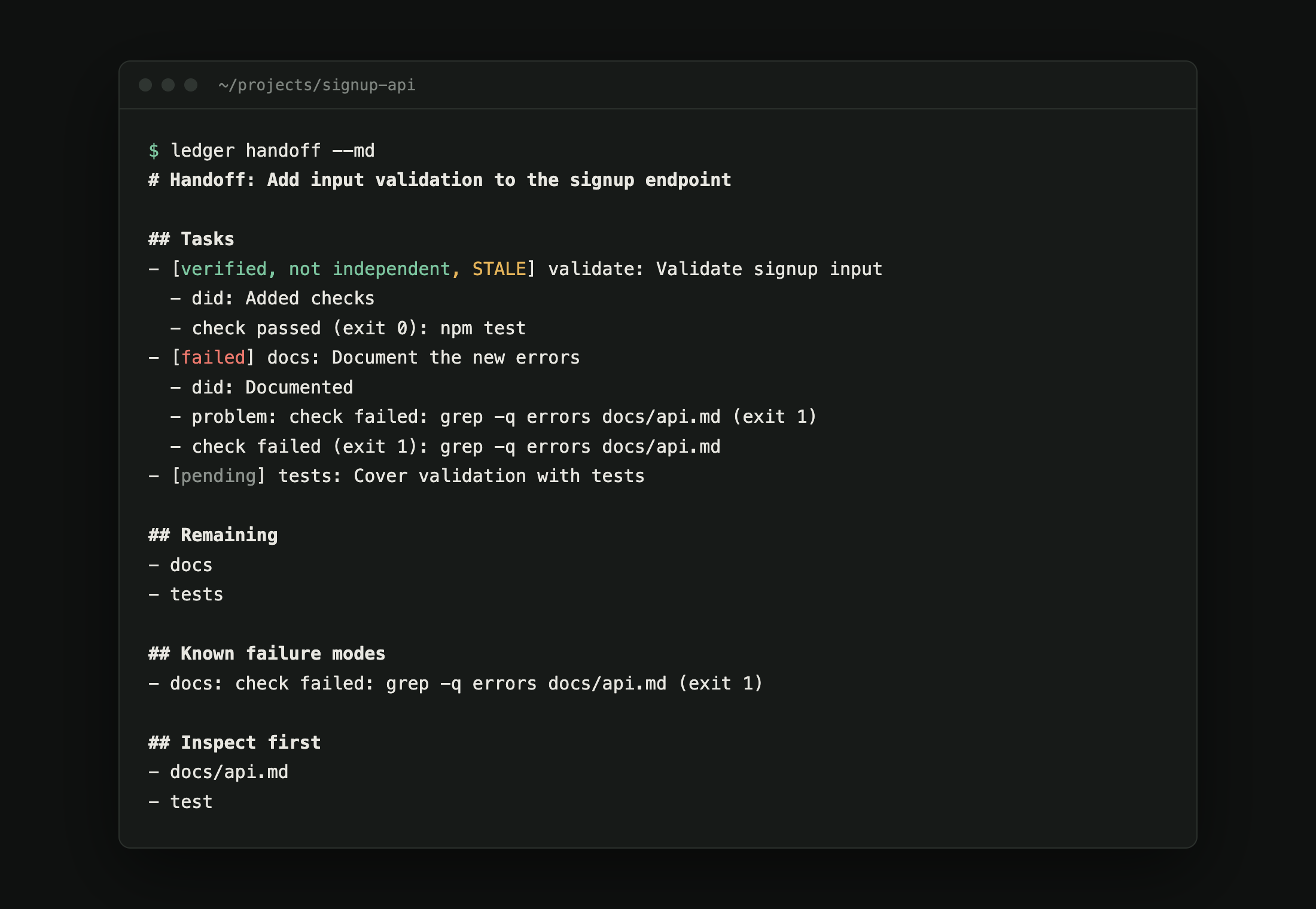
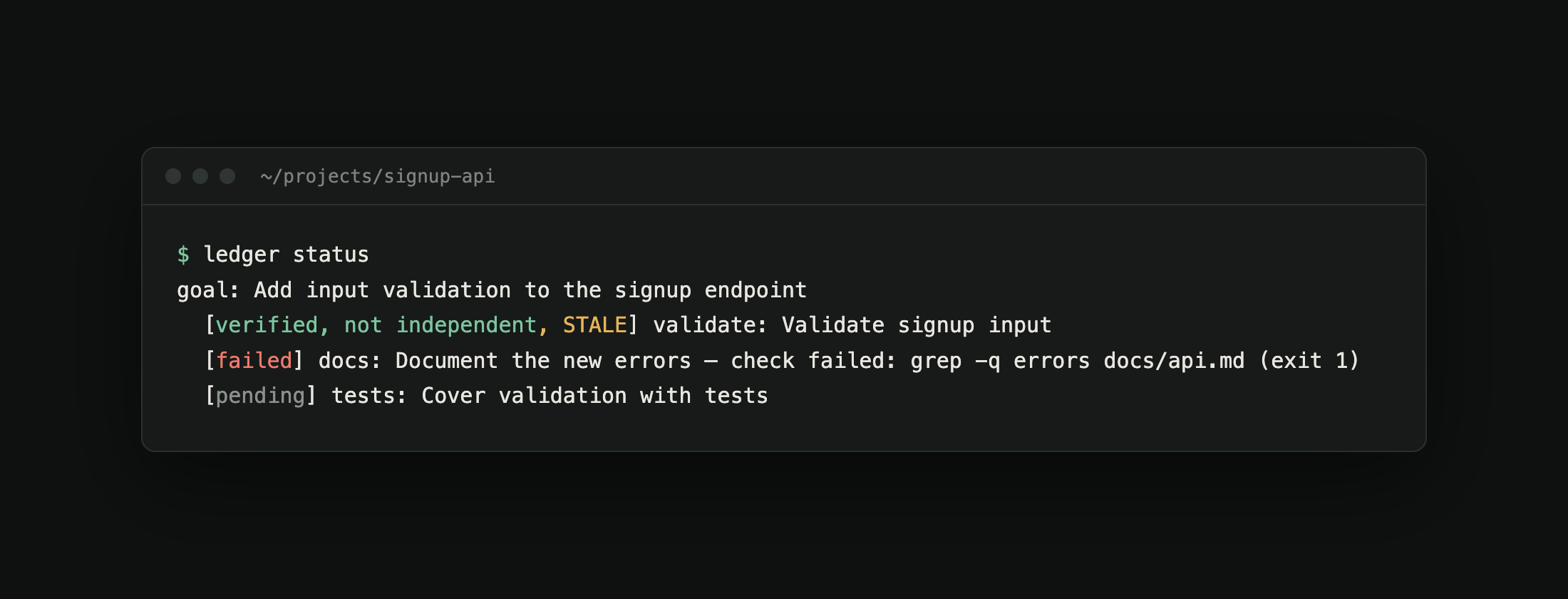
The core is a command-line tool over a JSON ledger file, with no daemon, database, or server. Task states are pending, running, done, verified, failed, and blocked, and the core never executes plan commands itself, because model-written commands should go through the host's permission prompts.
A Stop hook stops a session from finishing with unfinished tasks. It deliberately fails open, so a broken guard can't trap a session.
The docs are explicit about what isn't done: evidence is model-reported by the verifier, file ownership is instructed rather than enforced at edit time, redaction is best-effort, and it has been exercised end to end only on a small task.
The challenges
Making evidence expire
A passing check is only meaningful for the files it ran against. Each check is bound to a content fingerprint of the task's owned files, so any later change shows the task as STALE until it is verified again.
Not trusting its own state
The ledger is schema-versioned, written atomically, and guarded by a lock. A corrupt ledger is reported rather than overwritten, and secrets in recorded output are redacted and truncated.
Parallelism without collisions
Tasks declare the files they own, and a directory counts as owning its contents. Batches must be file-disjoint, which is checked when a task starts.
Screenshots